SERVALO is an AI receptionist for HVAC shops. It answers every call, asks the right questions, and books the job. Run it 24/7, or just the hours your team can't cover.
An example call: a homeowner reports no cooling and a burning smell. Servalo captures the customer, address and symptom, raises the urgency to emergency because of the burning smell, flags that the job needs an EPA-608 certified technician the same day, and holds the booking for a human to approve.
An example call, drawn from the shipped intake — not live data.
The board picks the tech, and shows its work
That call lands in Needs your decision, takes its emergency flag, and goes to the technician whose certification, zone and drive time actually fit it — with the reason on the card. Your dispatcher can overrule any of it.
An example dispatch board: the emergency call from the example above arrives in the “needs your decision” queue, is assigned to a technician who is EPA-608 certified and already working that zone, and moves through scheduled, en route, on site and done. A dispatcher can override any assignment.
Missed calls are the most expensive thing in your shop
Contractors miss roughly a quarter of inbound calls. About 85% of callers who hit voicemail never call back — they call the next company — and every missed call is worth ~$180 on average, far more in peak season.
Twenty missed calls a month is real revenue driving to a competitor. With SERVALO on the line, voicemail never answers for you. Run the numbers for your shop.
Booked against a real calendar. Reviewed when it's done.
“Called at midnight, AC fixed by 9 AM. Unreal.”
Photos, notes and status flowed to the office live — and the good work the shop already did shows up on Google.
That is the whole chain — answered, intaken, booked, dispatched, closed out, reviewed. See the full walkthrough for coverage options, setup step by step, and what happens second by second on a real call.
Any receptionist handles the easy call
You just watched a straightforward one. These are the four that actually decide whether you'd hand over your phone line — the caller pushing for a price, the one who smells gas, the one who wants a human, the one calling at 11pm — plus the one who can't describe the problem at all. Pick any of them.
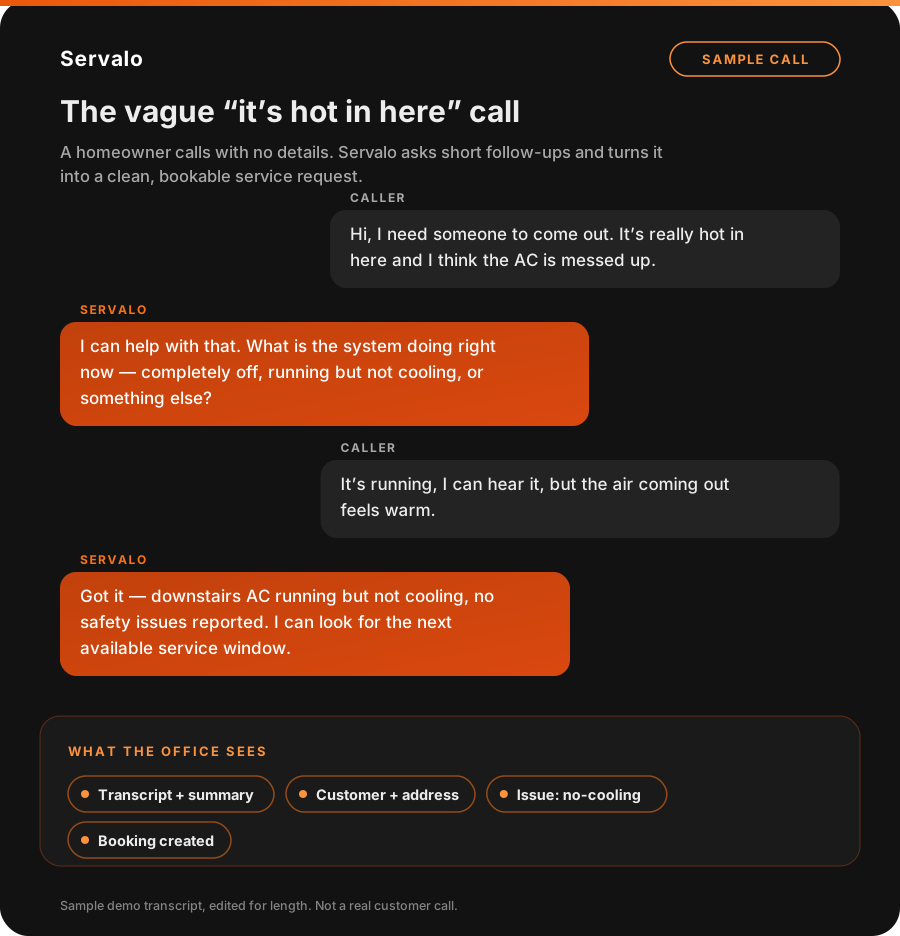
Most callers can’t describe the problem
“It’s hot in here” is not a work order. The agent asks the two or three questions a dispatcher would — is the outdoor unit running, is it blowing warm, when did it start — and what lands on your board is a clean, bookable service request.
Sample call · the intake runs the same way on the live line
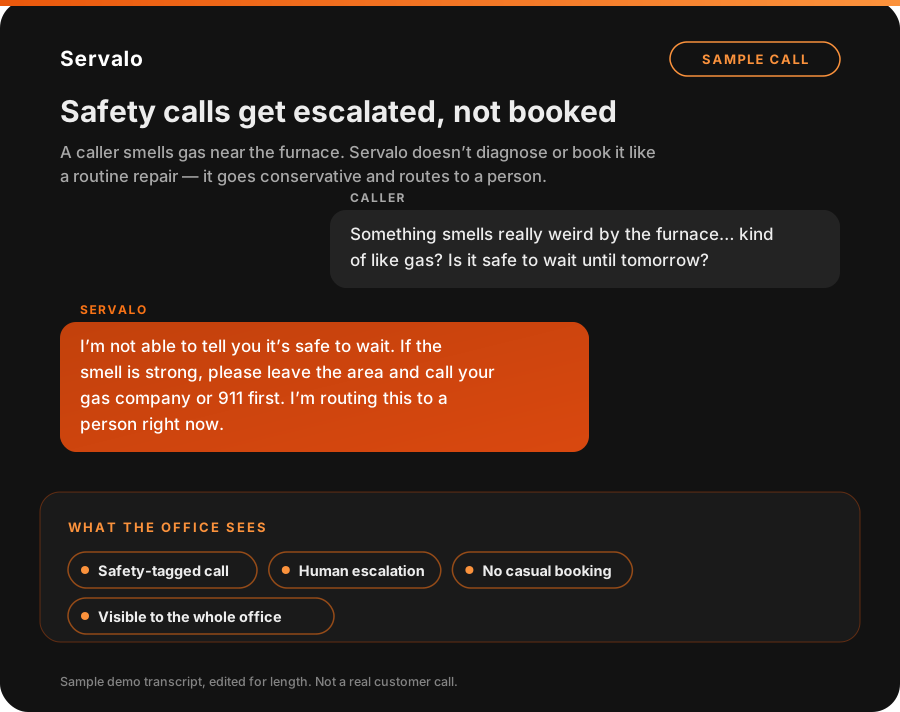
The one call it must never get wrong
It doesn’t diagnose a gas smell and it doesn’t book it like a repair. The guidance is fixed in code, word for word, and the model cannot soften it, skip it, or talk its way past it — then your team is alerted.
Sample call · the intake runs the same way on the live line
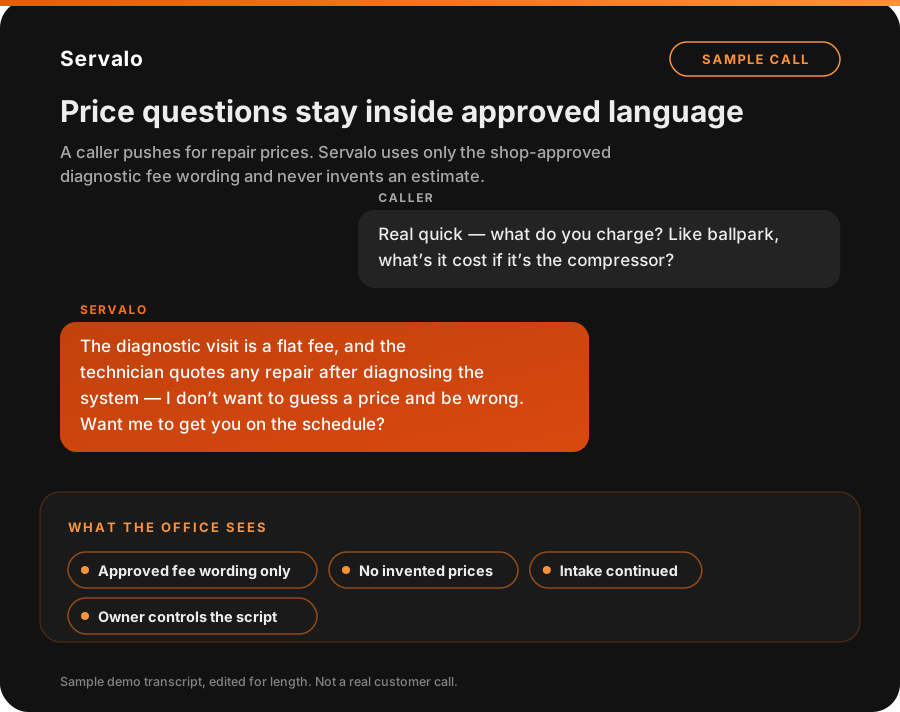
It quotes your fee. It never invents one.
Pushed for a number on a repair it hasn’t seen, it stays inside the wording you approved and offers the visit instead. An AI that guesses a price has already cost you the argument on the invoice.
Sample call · the intake runs the same way on the live line
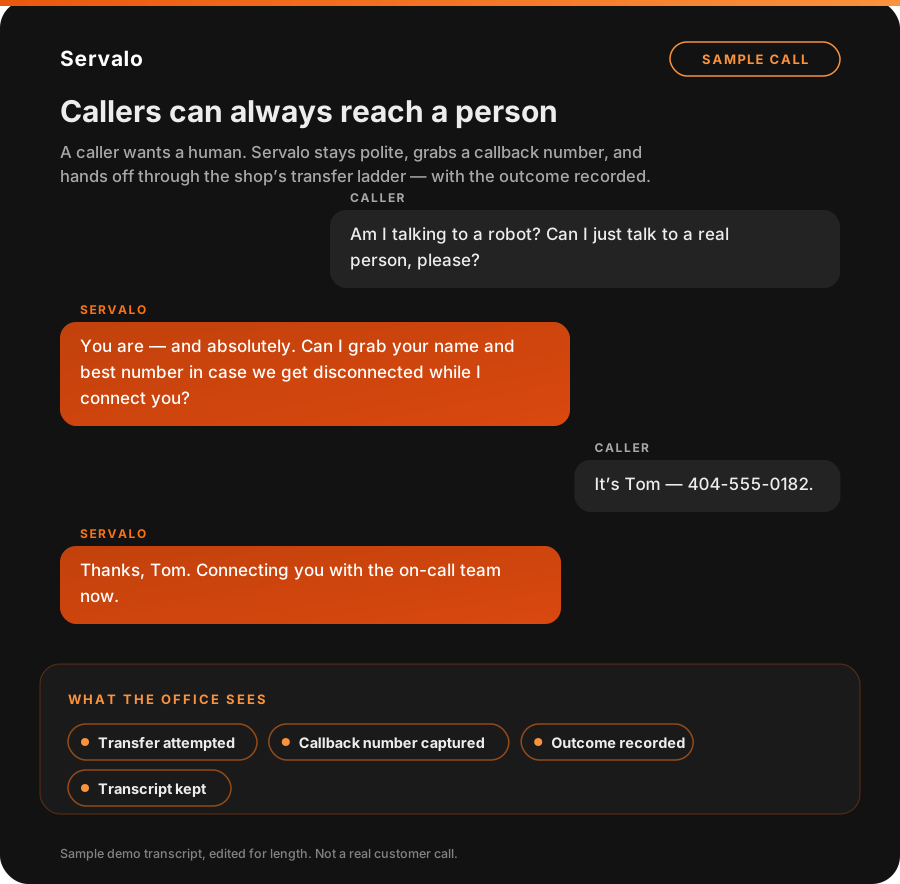
Anyone who wants a human gets one
No maze, no insisting. It takes the callback number, works your transfer ladder, and records what actually happened — so “someone will call you back” is a task on your board, not a phrase.
Sample call · the intake runs the same way on the live line
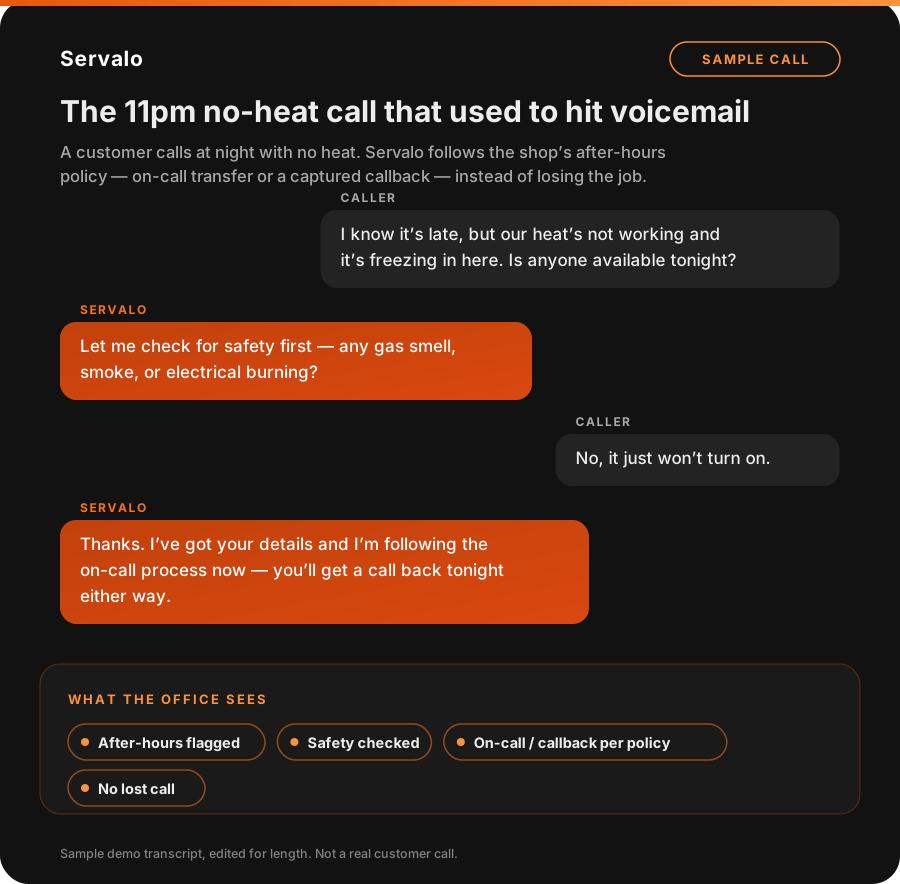
Nights and weekends are where the jobs leak out
The call that used to reach voicemail follows your after-hours policy instead — on-call transfer or a captured callback with the whole intake attached. By morning it’s a booked job, not a message.
Sample call · the intake runs the same way on the live line
One system, four seats
Not a chatbot bolted onto your phone line — the full chain, with a surface for every person in the company.
A front desk that never breaks
- 24/7, or just after-hours and overflow — your call
- Asks real diagnostic questions like a trained CSR — and never re-asks what the caller already said
- Answers price, plan and warranty questions from your playbook
- Sells and services your maintenance plan — recognizes members, knows their visits, mentions the plan at the right moment
- Knows what you don’t do, and politely declines it
- Books the whole call in Spanish when the caller prefers it
Dispatch you can argue with
- Day lanes, calendar, and a live map with real drive times
- Every assignment shows its reason — skills, zone, hours, certifications
- Steers refrigerant work to EPA-608 certified techs — warns on a mismatch, never blocks your call
- Risky bookings hold for a human yes
A tech app that fits in a pocket
- Today’s route with drive times, one-tap call / text / navigate
- On my way → arrived → done, visible to the office live
- Before / after / nameplate photos on every job
- Finish requirements you set — summary and photos before closeout
Every record in one place
- Every call transcribed and searchable, linked to the customer
- Customer + job records, spreadsheet import for your existing book
- Website contact form feeds the same queue as calls
- Google reviews synced, replied to, and requested after every job
Voicemail, an answering service, or another CSR
Those are the three things shops do about missed calls today. Here's where each one lands — including what they beat us at.
| Voicemail | Answering service | Another CSR | SERVALO | |
|---|---|---|---|---|
| Answers at 11pm on a Saturday | Takes a message | Yes | Only if you pay nights | Yes, every time |
| Asks real HVAC diagnostic questions | No | Reads a script, no HVAC training | Yes, once trained | Yes, from your playbook |
| Books into your actual calendar | No | Usually just takes a message | Yes | Yes, with your rules enforced |
| Knows your prices, plans and policies | No | No | Yes | Yes — and only what you approved |
| Handles a gas-smell call correctly | No | Varies by operator | Yes, if trained for it | Guidance is fixed in code |
| Dispatches the right tech with a reason | No | No | Yes, by memory | Yes, by skills, zone and drive time |
| Judgment on a call nobody scripted | No | Limited | Best in class | Hands off to your person |
| Cost | Free — and the missed jobs | Roughly $1–2 a call | A salary, plus benefits | $150 per tech / month |
A good CSR beats us on judgment and on the customer who needs a human — which is why the agent hands off to one, and why we never claim otherwise. It just can't be three of them, awake at 2am, for $150 a month.
You teach it. It runs your desk.
Servalo doesn't answer like a generic bot — it answers like your best office hire, because you onboard it like one: your fees, your maintenance plans, your policies, your hours. We set it all up with you on the setup call; most shops are configured in under an hour.
Your prices
It quotes your service-call fee in your words — and never invents a repair price.
“The service call is $99, and it applies toward any repair you approve.”
Your maintenance plan
Your tiers, your perks, your prices — offered at the right moment, and members get recognized when they call.
“Found you — you’re on the Comfort Club. That tune-up’s covered.”
Your policies & SOPs
Warranty rules, service area, what you don’t do — it answers from the playbook you approve, nothing else.
“We don’t service oil furnaces — but let me take your number so the office can point you the right way.”
Your playbook, live
Change a fee, a policy, or your hours in Settings and the very next call speaks it.
Edit → save → the next caller hears it. No deploy, no waiting.
Trained like a safety officer, not a chatbot
When a caller says “the house smells like gas,” the model doesn't improvise. Hard-coded rules take over: the caller hears the same guidance their gas company would give and your team is alerted — even when they never say the word “gas.” And it listens like a person, not a keyword scanner: a homeowner asking about CO detectors gets a booked visit, not an evacuation script. Burning smells and sparking get coached and booked as priority visits, upset callers and repeat problems land in front of your office with care — and the AI can raise an alarm, but it can never lower one.
The AI talks. Your rules decide.
An AI statement can never create a booking, invent a price, or override a safety rule. Your calendar, your service list, your approval queue and your team's credentials are the authority — the model just does the talking.
Approve before it's final
Anything uncertain — new equipment quotes, flagged hazards, big jobs — holds for a human yes. The caller hears “we're holding that time for you,” never a false promise.
See why, always
Every assignment, escalation and refusal carries its reason in plain English. No black boxes to trust — an audit trail to read.
Your team, your access
Owners, dispatchers and techs each see exactly their slice. Remove someone and their sign-in dies with the membership — instantly.
Your number stays yours
You forward your existing line. Going live is flipping the forward on; leaving is flipping it off. Nothing to install, and nothing to unwind.
Call the AI. Right now. Try to break it.
That's a live line answered by the exact receptionist your customers would get — running a real intake against a real schedule.
$150 per tech / month · rate locked for founding partners
One-time $299 setup. Unlimited office users — you pay for techs on the board, not logins. Fair use of 125 answered calls per tech monthly, then 35¢ a call. No surprises on the bill, ever.
What owners ask us first
Will my customers know it’s an AI?
Yes — every call opens by saying so, and that it’s transcribed. Then it gets to work. Callers stop caring about the voice when the visit gets booked in ninety seconds. Call the demo line and judge for yourself.
What happens on a real emergency?
The AI stops deciding and the code takes over — the caller gets the official guidance word for word, and your team and on-call phone are alerted immediately. The AI cannot soften it, skip it, or talk its way past it. It reads the caller’s whole sentence first, so a dusty smell on the first heat of the season isn’t treated the same as “I smell gas” — and if that check is ever unavailable, it errs toward treating it as the emergency.
Does it actually sound like a person?
Judge it yourself on the demo line — but the reason it holds up is a hundred small decisions. It speaks a price as “one eighty-nine dollars” instead of reading out digits and symbols. It ignores “mm-hmm” instead of stopping every time you make a listening noise, but a real interruption does cut it off. It says “one sec, let me pull up the schedule” instead of going silent while it looks. And when you talk over it, it only remembers the words you actually heard — so it never says “as I mentioned” about something that got cut off.
What if it mishears something?
It repeats your name back the first time it uses it and asks you to spell an unusual one, because a name is the most-misheard thing on a phone line and that is your one natural chance to fix it. It reads the full address back once, always asks for the apartment number, and if the address will not validate it books you anyway with a note for the office rather than refusing you over stale map data. On the emergency side it is built around the near-misses: “no gas smell or anything” does not trigger anything, and neither does “my gas furnace won’t start” or “it’s burning up in here.”
What happens if something breaks on your end?
Every failure path was designed on purpose. If a caller hangs up mid-call they land in your callback queue with a text back, carrying whatever was captured. If somebody asks for a person and nobody picks up anywhere, that becomes an urgent alert instead of an apology. When we ship a software update, live callers are handed to a human rather than hung up on. And every time the AI says “someone will call you right back,” a real task is created in the same breath — a promise with nothing behind it is the most damaging thing an AI can say.
Do I keep my phone number?
Yes. You forward your existing line to SERVALO. Going live is flipping the forward on; leaving is flipping it off. Your number never stops being yours.
What if the AI isn’t sure?
Unsure calls become callbacks and held bookings for your office — flagged, never guessed. Human review is a feature, not a failure.
What does setup look like?
White-glove. We configure your hours, techs, service area and playbook with you on a call, run test calls together — including a safety drill — and only then forward your line. Live in days.
Your phone is ringing right now.
We're onboarding a small number of residential HVAC companies personally — your hours, techs, service area and playbook configured with you on one call, the emergency drill tested before a single customer hears it. Founding partners lock their rate for as long as they're with us.
Still deciding? Hear it answer first.